

Look Up
On going the extra mile in design.

Okay Google, play My Funny Valentine by the Gerry Mulligan Quartet.
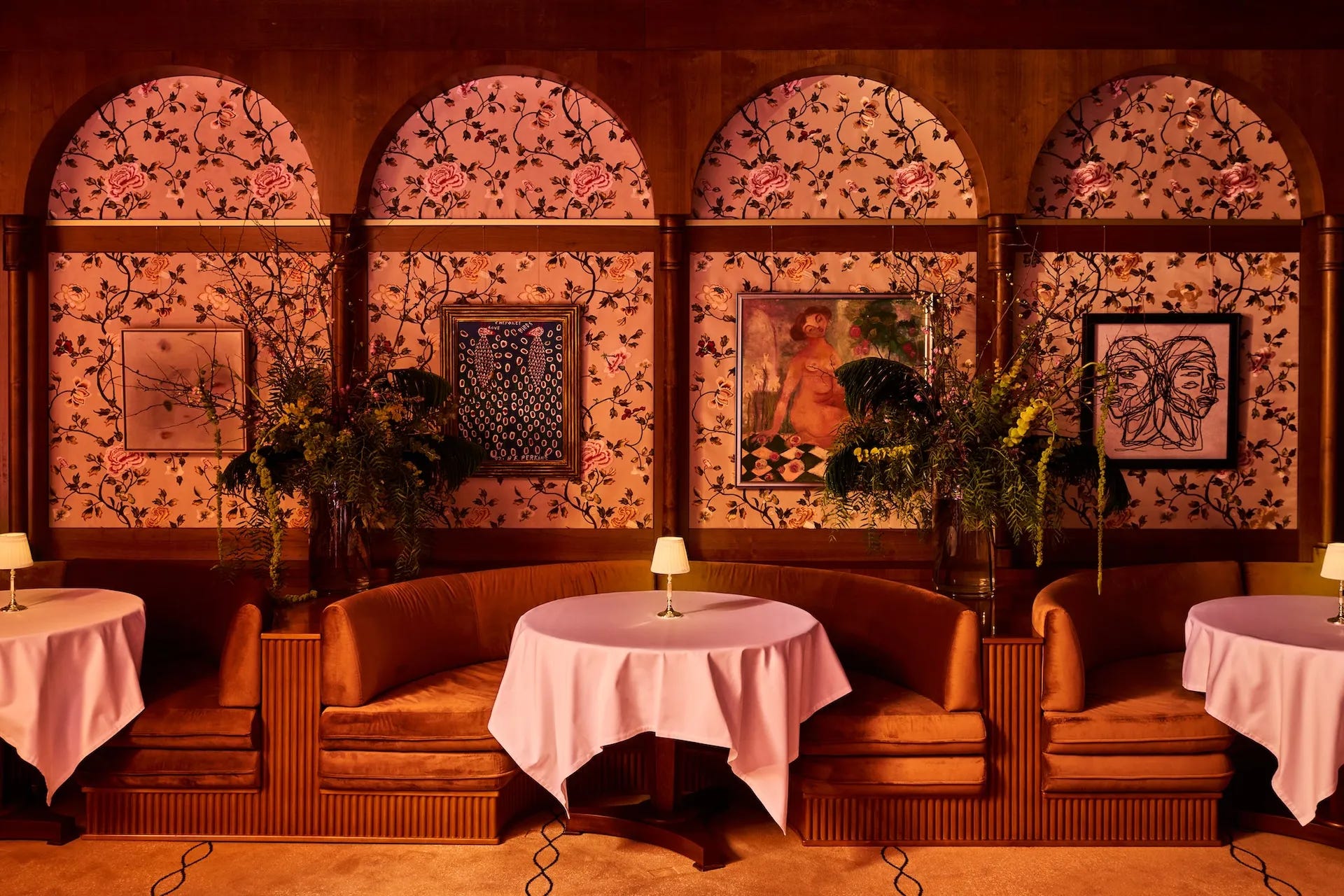
Picture this. You’re in a restaurant with people you met mere hours ago. From small talk to big talk, you’ve done the rounds. In a welcome lull in the discussion, your eyes begin to wander, searching for the conversation piece.
The details of the room slowly start to reveal themselves. Paint chipping away at the walls. Hardwood losing its varnish. And worst of all, the ceiling. Lifeless. Tame. Empty. Devoid of personality, detail, or charm with an overpowering fixture in the centre, posing as a chandelier.
If I were a hotelier, this would be my worst-case scenario.
Conversely, spaces with a designed ceiling signal the highest level of care and consideration, for both the room and the people who enter it. It tells me no stone was left unturned. That the space was meant to feel complete, intentional, and referential, depending, of course, on how its details were sourced.
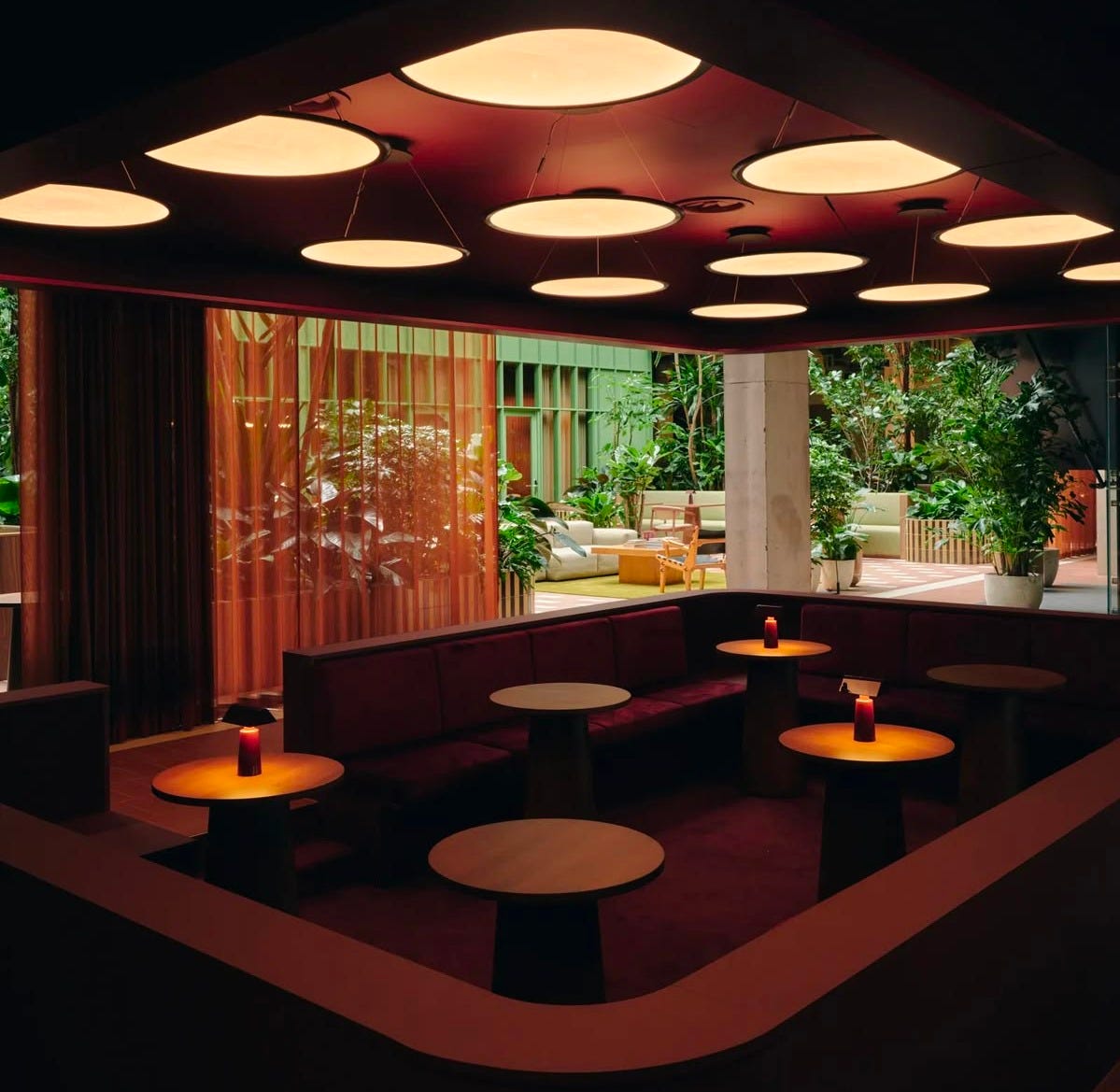
Is a decisive ceiling design an obligation? Of course not. But it is a welcome luxury. One that offers insight into the psychology of the designer.
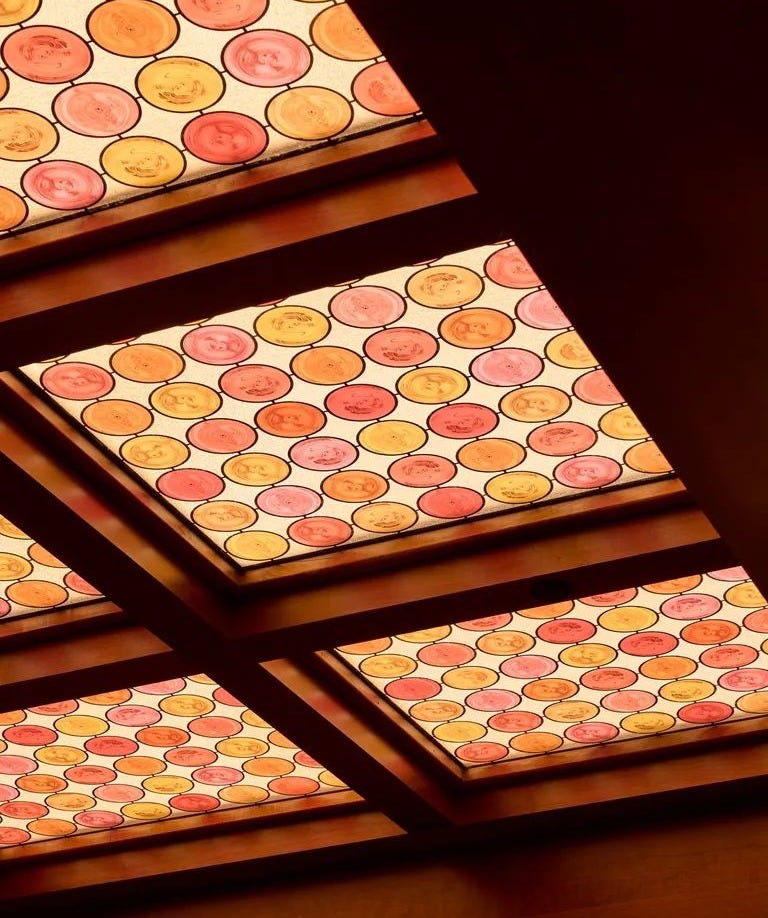
For example, in a historic building with preserved ceiling tiles, I can assume the designer is sensitive to protecting the space’s original charm.
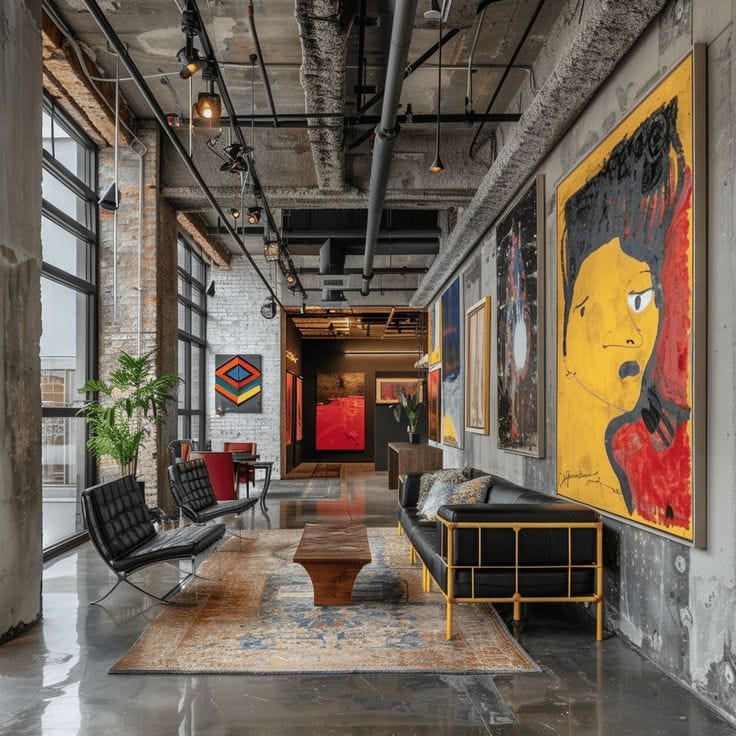
On the other hand, an exposed ceiling often signals a more millennial approach, where industrial flair becomes the defining feature. In my opinion, it can feel visually oppressive, but I respect ones creative liberties.
Designing the ceiling of a hospitality space isn’t just aesthetic, it’s strategic. It gives you the opportunity to:
Give guests a conversation starter
A shared environment is one of the easiest ways to build rapport. Even better when the space is actually worth discussing.
Make the space feel complete
The eye shouldn’t be interrupted by abrupt absences, moments where the design simply stops. A lack of budget is one thing, but a lack of intention is another.
Show your willingness to go the extra mile
Whether self-referential or inspired, every detail contributes to your identity as an establishment. Don’t let it feel unfinished…like seeing behind the curtain at Disneyland.
Add a layer of storytelling
If you’re telling a story, commit to it. Build the universe fully. Leave Easter eggs. Let the narrative flow from the main room to the hallways, to the bathrooms.
These are my thoughts, but I’m curious about yours. You have the talking stick.
Until then, see you on the Otherside.
Cassandra
All interiors are subliminal stimulants, even if they don’t mean to be